Monday, September 30, 2019

Weeks 7–9: Toni Morrison's "The Bluest Eye" (1970)


Our next selection this semester will continue to explore the overlapping complexities of race and gender that have been a central preoccupation of our work from Larsen through McCullers and Kerouac. The Bluest Eye was Toni Morrison's debut novel, first published in 1970, and an auspicious start to a literary career that would see her receive the rarest and most prestigious acclaims, including the Nobel Prize in Literature. When Morrison died this summer, it left a conspicuous void in American (and international) arts and letters that will not be easily filled.

In a foreword added in 1993, Morrison frames the novel as an exercise in empathy: "There can't be anyone, I am sure, who doesn't know what it feels like to be disliked, even rejected, momentarily or for sustained periods of time. Perhaps the feeling is merely indifference, mild annoyance, but it may also be hurt. It may even be that some of us know what it is like to be actually hated— hated for things we have no control over and cannot change." "When this happens," she continues, "it is some consolation to know that the dislike or hatred is unjustified—that you don't deserve it. And if you have the emotional strength and/or support from family and friends, the damage is reduced or erased. We think of it as the stress (minor or disabling) that is part of life as a human."

However, when working on The Bluest Eye, Morrison had a different sort of character in mind, specifically "the far more tragic and disabling consequences of accepting rejection as legitimate, as self-evident. I knew that some victims of powerful self-loathing turn out to be dangerous, violent, reproducing the enemy who has humiliated them over and over. Others surrender their identity; melt into a structure that delivers the strong persona they lack. Most others, however, grow beyond it. But there are some who collapse, silently, anonymously, with no voice to express or acknowledge it. They are invisible." This is especially true for children and for those at a disadvantage due to their circumstances. As a result, "[t]he project, then, for this, my first book, was to enter the life of the one least likely to withstand such damaging forces because of youth, gender, and race."

By Morrison's own admission, she "put the whole plot on the first page," and so we know that we will be in for a harrowing journey:
Quiet as it's kept, there were no marigolds in the fall of 1941. We thought, at the time, that it was because Pecola was having her father's baby that the marigolds did not grow. A little examination and much less melancholy would have proved to us that our seeds were not the only ones that did not sprout; nobody's did. Not even the gardens fronting the lake showed marigolds that year. But so deeply concerned were we with the health and safe delivery of Pecola's baby we could think of nothing but our own magic: if we planted the seeds, and said the right words over them, they would blossom, and everything would be all right.
If you're familiar with Morrison's writing, then you know that the tradeoff for enduring these heavy themes is a gorgeous lyrical voice that offers us compelling characters and deeply-felt insights into the human condition. That, of course, is why her work has been cherished for generations, and also why practically any other author on our reading list could be swapped out for someone else, but I'd never imagine teaching a course on 20th century US literature without including Morrison.

We've been moving at a good clip throughout the semester, but since The Bluest Eye is a little longer, we'll add one additional class, and also have fall break to stretch things out a little. Here's our schedule:

  • Tues. October 8: Foreword and Autumn
  • Thurs. October 10: No Class — Fall Reading Days
  • Tues. October 15: Winter and the first two sections of Spring (up to 131)
  • Thurs. October 17: Spring (section starting SEEFATHERHEISBIGANDSTRONG... on 132 to 163)
  • Tues. October 22: Spring (section starting SEETHEDOGBOWWOWGOESTHEDOG... on 164) and Summer

Finally, here are a few links that might be helpful:
  • The New York Times review by John Leonard [link]
  • "Toni Morrison, Towering Novelist of the Black Experience, Dies at 88," from The Times [link]
  • Time Magazine: 10 Questions for Morrison [link]
  • Laila Lalami, "On Beauty: Banning Toni Morrison's The Bluest Eye" [link]
  • "It's Cold! Give Toni Morrison More Shawls" [link]

Tuesday, September 24, 2019

Week 6: Jack Kerouac's "The Subterraneans" (1958)


Once I was young and had so much more orientation and could talk with nervous intelligence about everything and with clarity and without as much literary preambling as this; in other words this is the story of an unself-confident man, at the same time of an egomaniac, naturally, facetious won't do—just to start at the beginning and let the truth seep out, that's what I'll do—. It began on a warm summernight—ah, she was sitting on the fender with Julien Alexander who is . . . let me begin with a history of the subterraneans of San Francisco . . .


Thus begins Jack Kerouac's The Subterraneans, the next book we'll be reading this term. If you know him and his work, it's likely for his second novel, 1957's On the Road, which —as Gilbert Millstein's career-making New York Times review of the book attests — was as defining a document of an emerging "Beat Generation" as the iconic works of Fitzgerald and Hemingway emblematized their own "Lost Generation." 

After the sudden success of On the Road Kerouac's publishers wanted to move quickly to capitalize on his notoriety, and The Subterraneans was the first of two books released in 1958 (the other being The Dharma Bums), within one year of On The Road. The Subterraneans was not only speedily published, but also speedily written — while On the Road's first draft came together in three weeks, Kerouac wrote this book during a three day binge of caffeine and benzadrine (a popular stimulant of the era). Not surprisingly, the novella is a fine example of the author's spontaneous prose style, riddled with long, poetically recursive run-on passages.

We've already talked a little about the complicated nature of Kerouac's relation to other races and cultures, and once again, it's at the heart of this book, which focuses on a brief love affair Kerouac (here called Leo Percepied) had with an African-American woman, Alene Lee (called Mardou Fox in the book) in 1953. Here's a photo by Allen Ginsberg of Lee (with William S. Burroughs) around the time of the book's events:


The Subterraneans' depiction of an interracial love affair was so controversial by late-1950s standards that when a (quite awful) film adaptation of the novel was made in 1960, the female love interest was changed to a young French woman.

As in On The Road, many of Kerouac's friends and fellow Beat Generation writers appear under pseudonyms within the narrative. Burroughs appears as Frank Carmody, while Ginsberg is Adam Moorad; Neal Cassady (the hero of On the Road) is mentioned in passing as Leroy, and poet Gregory Corso plays a major role in the novel under the name Yuri Gligoric. Though the real-life events took place in New York City, Kerouac chose to switch the location to San Francisco (a city he was well-acquainted with at this time).

Kerouac spent quite a bit of time and effort defending the ethos of the Beats once they came under the scrutiny of the general public. This novel's title, however, says quite a bit about his intentions (or wishes) for the shared philosophies of the Beats — namely that it remain hidden underground, a secret underworld paradise — and if the name reminds you of Bob Dylan's "Subterranean Homesick Blues," you're on the mark: Dylan's just one of many artists, writers and musicians who were inspired by Kerouac's prose and this book in particular. Painter Jean-Michel Basquiat, for example, is shown at right photographed with his well-thumbed copy of the book (one of his favorites). David Bowie also titled a track from his 1977 album, Low, after the novel:


The Subterraneans is relatively brief, so we'll only be spending two days on it. The reading will break up accordingly:
  • Tues. October 1:  part 1 (1–42)
  • Thurs. October 3:  part 2 (43–111)

Here's Kerouac reading from The Subterraneans on the 1959 record Reading by Jack Kerouac on the Beat Generation [MP3]. The selection starts around page 13 in the Grove Press edition.

Finally, to provide a sense of The Subterraneans' contemporary reception, here are two reviews from major publications of the time:
  • David Dempsey's review from The New York Times: [link] 
  • Time Magazine's review of the novel, along with Stephen Birmingham's Young Mr. Keefe [link]* 
* I was going to make a joke about "who the hell is Stephen Birmingham?" but apparently he used to teach here at UC(?)(!) Here's a photo of the snazzily-dressed author (third from the left) at a party held in his honor in 1994:


Friday, September 13, 2019

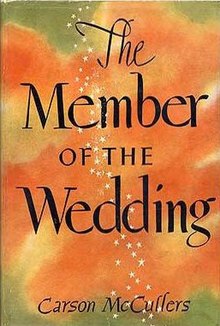
Weeks 4 and 5: Carson McCullers' "The Member of the Wedding" (1946)

Carson McCullers in 1947, one year after the publication of The Member of the Wedding
Beyond advancing a nearly a quarter century, we're making a rather precipitous temperamental leap between our second and third books of the semester, from the urban bustle and adult worries of Larsen's characters to the tumultuous adolescence of southern tomboy Frankie Addams, the 12 year old protagonist of Carson McCullers' The Member of the Wedding.

While William Faulkner was undoubtedly the leading voice in the Southern Gothic movement, a surprising number of women were among its finest practitioners, including Flannery O'Connor, Harper Lee, and McCullers, who might have left the south before beginning her career at the tender age of 23 with The Heart Is a Lonely Hunter (1940).  McCullers' precocious prolificacy was fortunate for her readers, however, since accumulating bad health would catch up with her not long after the publication of The Member of the Wedding, with recurring strokes leaving her paralyzed on her right side, significantly affecting her ability to write.

Of all of her writing, The Member of the Wedding has perhaps had the busiest afterlife. Having been adapted for the Broadway stage by McCullers herself, it's undergone a number of revivals in the intervening years, and has also been reconfigured as a musical, a television drama, and twice as a film (in 1952 and 1997). The reason for this flexibility might be related to the novel's inherent simplicity: it features a cast of just three core characters (Frankie Addams, her African American maid and surrogate-mother Berenice Sadie Brown, and her six year old cousin John Henry West), and unfolds over the course of a few days within a relatively constrained setting. Nevertheless, this spartan structure serves as the perfect setting for a rich attentiveness to the rhythms of everyday life, and even more importantly the inner life of its young protagonist. Caught between childhood innocence and adulthood, Frankie suffers exquisitely, works her way through questions of identity and ambition, fantasizes, makes mistakes, and tries to learn from them, and we're along for the ride to enjoy every moment. There's a lot for us to empathize with here and a lot of grim humor as well, not to mention fascinating perspectives on shifting conceptions of race and gender within an evolving south.

Here's our reading schedule for The Member of the Wedding:
  • Thurs. September 19: part one
  • Tues. September 24: part two, chapters 1 and 2
  • Thurs. September 26: part 2, chapter 3 and part 3

And here are some supplemental resources for the book:
  • The Guardian (UK) hails The Member of the Wedding as an "overlooked classic": [link]
  • The Independent (UK) diagrees, calls it a "book of a lifetime": [link]
  • Not wanting to miss out on unfiltered praise, PANK reviewer Sara Watson (once a grad student here at UC) sees it as a "book we can't quit": [link]
  • The Carson McCullers Project homepage for the book (and its subsequent adaptations): [link]

Tuesday, September 3, 2019

Weeks 3 and 4: Nella Larsen's "Passing" (1929)


While ex-pats like Stein, Hemingway, and Fitzgerald were blazing new trails for American literature in the cafés and bars of Europe, another groundbreaking literary cultural was taking place on our own shores: the Harlem Renaissance. African American artists and intellectuals such as Langston Hughes, Zora Neale Hurston, Countee Cullen, Jean Toomer, James Weldon Johnson, and Claude McKay, are some of the authors of that period who continue to be read nearly a century later, along with Nella Larsen, whose 1929 novel, Passing we'll be reading next. As an aspiring writer Larsen moved from New Jersey to Harlem with the intention of soaking up inspiration. Along with her first novel, Quicksand, Passing is a key text within 20th century literary discourses of both race and gender, and sadly, these two potent books serve as her legacy: though she'd live until 1964 she gave up writing in the early 1930s.

We should unpack a few ideas before proceeding. First, there's the act of racial passing, which in the case of Larsen meant light-skinned individuals of mixed race moving within segregated (read: white) social circles, whether by actively disguising or simply not making mention of their race. This runs counter to the "one-drop rule," by which anyone with non-white ancestry (regardless of how scant it might be or how far back it lies) is excluded from identifying as white. In an era of rampant prejudice, "separate but equal" segregation (as upheld by Plessy v. Ferguson), and the threat of violence behind any transgression of the established social order one can imagine both the tremendous risk and the great potential for an improved way of life that passing entailed.

That risk increased exponentially within the legal institution of marriage, and one precedent that informs Passing is the Rhinelander case (1925) in which a husband sued his wife for failing to disclose her racial identity (eventually the court would find in her favor) While New York did not have anti-miscegenation laws, most states did. Between the late 19th century and early 20th century many of those laws were individually overturned but at the time of the Supreme Court's landmark decision on Loving v. Virginia in 1967 there were still 16 states were mixed-race marriage was illegal. Thus one can see why certain cities like New York — offering community, anonymity, and a (comparatively) progressive political environment — not only served as havens for minority populations, but also as fertile ground for creative and political innovation.

We'll find these ideas given human shape in Passing's central relationship between Irene Redfield and Clare Kendry, the latter of whom is married to a white man unaware of her racial identity. These childhood friends, who grew apart but are drawn back into the orbits of one another's lives after a chance encounter, get to see what lies on either side of the racial divide and come to their own conclsions about how best one might hope to make a life in a hostile world.

Here's our reading schedule for Passing:
  • Tues. September 10: Part One: Encounter
  • Thurs. September 12: Part Two: Re-Encounter
  • Tues. September 17: Part Three: Finale

And here are some supplemental resources for the novel:
  • Richard Bernstein reviews a 2001 reissue of Passing for the New York Times: [link]
  • The Times offers up a 2018 obituary for Larsen as part of their "Overlooked" series: [link]
  • Heidi W. Durrow sings the praises of Passing for a 2010 NPR piece: [link]
  • Lexi Nisita explores "Why Larsen's Passing Still Matters" for Refinery 29: [link]

Sunday, August 25, 2019

Weeks 1 and 2: F. Scott Fitzgerald's "The Great Gatsby" (1925)


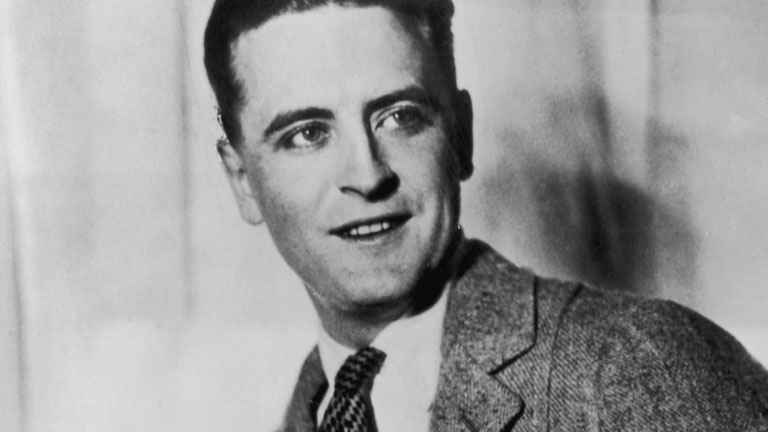
Our first novel this semester will be F. Scott Fitzgerald's best-known work, and one of the finest American novels of the modernist period, The Great Gatsby. When the Modern Library ranked the Top 100 English-Language Novels of the 20th Century in 1998, Gatsby came in second, and was the highest-ranking American entry (bookended by James Joyce's Ulysses [#1] and Portrait of the Artist as a Young Man [#3]), however while the book received positive reviews upon its publication in 1925, it failed to sell as many copies as its predecessors (This Side of Paradise and The Beautiful and the Damned) and at the time of Fitzgerald's death fifteen years later, it was out of print and virtually forgotten.

The book begins with these iconic lines:
In my younger and more vulnerable years my father gave me some advice that I've been turning over in my mind ever since. "Whenever you feel like criticizing any one," he told me, "just remember that all the people in this world haven’t had the advantages that you’ve had."
and from the get-go we know that we're in the milieu of full-fledged Jazz Age opulence. While we'll see the rhythms and energy of jazz factor into Harlem Renaissance fiction like our next book, Nella Larsen's Passing, for Fitzgerald it's more about the glamorous trappings of that lifestyle: the decadence of a war-weary 20s culture that lived as if there was no tomorrow, flaunting prohibition laws and spending profligately. This valorization of the moneyed classes had roots in his upbringing in prestigious schools, culminating in his time at Princeton, but the sensitive young writer was able to see beyond mere starry-eyed adulation to find sadness and emptiness behind well-cultivated bon vivant personae, as the opening lines to "The Rich Boy" (a short story published one year after Gatbsy) attest:
Let me tell you about the very rich. They are different from you and me. They possess and enjoy early, and it does something to them, makes them soft where we are hard, and cynical where we are trustful, in a way that, unless you were born rich, it is very difficult to understand. They think, deep in their hearts, that they are better than we are because we had to discover the compensations and refuges of life for ourselves.
(These lines, by the way, are often misquoted. Quote/Counterquote offers a great analysis of this common mistake.)

Beyond class, gender plays a major role in shaping the characters we find here and the fates of folks like Daisy Buchanan and Jordan Baker will give us much to talk about.

Here's our reading schedule for The Great Gatsby:
  • Thurs. August 29: chapters 1–3
  • Tues. September 3: chapters 4–7 
  • Thurs. September 5: chapters 8–9
and a few links to supplemental materials:
  • The New York Times review from April 19, 1925: [link]
  • Fitzgerald's Times obituary from December 23, 1940: [link]
  • Time Magazine's listing for Gatsby as part of its "100 Best English Novels from 1923 to the Present," including a link to their original review: [link] 
  • George Remus, Cincinnati's own larger-than-life inspiration for Jay Gatsby: [link]
  • Pop Chart Lab offers a poster-sized chart of the novel's character interactions by chapter: [link]

legendary comic Andy Kaufman reads Gatsby in its entirety as part of his act

a dramatization of the same from the Kaufman biopic, Man on the Moon

Welcome to Our Class!

Nam June Paik, Electronic Superhighway: Continental U.S., Alaska, Hawaii (1995)
If you've taken the first half of this course or are familiar with early US* literature in general one thing you might've noticed is that it doesn't really sound all that American. Sure, it's written by Americans and about America, but literature doesn't resoundingly emerge in the US until the early 19th century and even then it's largely beholden to British aesthetics and written in British parlance. Moreover, 19th century writers in the US found themselves woefully behind the example of their British peers: Romanticism, for example, is inaugurated in 1798 with Coleridge and Wordsworth's first edition of Lyrical Ballads, but it takes thirty years for its influence to become evident in the work of Emerson and Poe, and doesn't fully hit its stride — through Whitman, Dickinson, Melville, Crane, et al. — until at least fifty years later.

In the transition from the 19th century the 20th, however American authors find their own unique voice. There are are early glimpses of this in the ambitious experiments in language found in Whitman's Leaves of Grass and Twain's Adventures of Huckleberry Finn (Hemingway offers this unmitigated praise: "All modern American literature comes from one book by Mark Twain called Huckleberry Finn. American writing comes from that. There was nothing before. There has been nothing as good since.") and by the turn of the century America's authors are at the forefront of Modernism, with the groundbreaking work of Stein and Lindsay leading the way for iconic work by Anderson, Hemingway, Fitzgerald, Faulkner, Williams, Moore, Frost, Sandburg, and more between the First and Second World Wars. Moreover, we see America move beyond the hegemony of straight, white male authors to embrace its central melting pot ideology, both during the heyday of Modernism and through its evolution into Postmodernism. Our reading list aims to reflect this complex evolution, offering up canonical texts alongside modern classics from a diverse array of authors representing the breadth of our national experience, and our goal this semester will be to trace that change from beginning to end. 

I'm excited about the work we'll be doing and I hope you will be as well.


* The official name of this course somewhat problematically replicates a common error — one that we'll continue to make throughout the semester for want of a more streamlined adjective. Properly speaking, we are studying US literature of the 20th and 21st centuries and so that's why I've changed the name slightly; "American" literature would encompass the Americas as a whole, or at the very least our North American neighbors Canada and Mexico.**

** [ yes, the footnote has a footnote ] Interestingly in choosing Valeria Luiselli — who was born in Mexico, first moved to the US at the age of 2, attended college in Mexico, and has lived in the US since — I'm pushing even harder against these questions of nomenclature.